A Brief History of Husker Football: GBR!
For over a century, Saturdays in Lincoln have been treated like a sacred gathering. From humble, turn-of-the-century beginnings to the unmatched dominance of the late 20th century, the history of our Nebraska Cornhuskers is a rollercoaster of grit, innovation, and unwavering loyalty.
The Early Years: Planting the Seeds (1890–1961)
Nebraska’s football journey began on November 27, 1890, with a 10-0 victory over the Omaha YMCA. Back then, they weren't even known as the Cornhuskers; the team cycled through nicknames like the Old Gold Knights, the Antelopes, and the Bugeaters. It wasn't until 1900 that sportswriter Cy Sherman permanently dubbed them the "Cornhuskers."
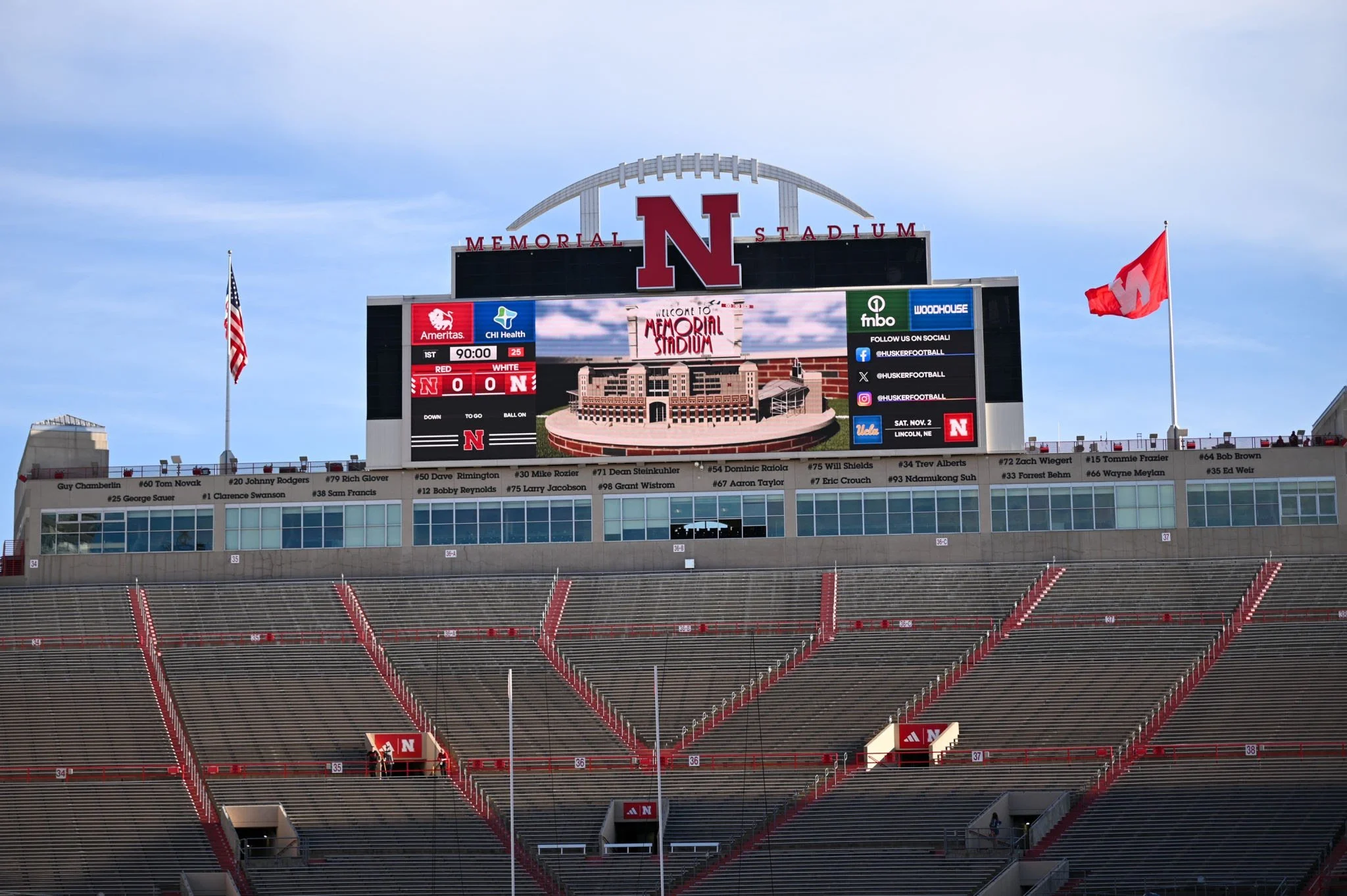
The program found early regional success under legendary coaches like Walter C. "Bummy" Booth and Jumbo Stiehm, dominating the Missouri Valley Conference. In 1923, Nebraska moved into its permanent home: Memorial Stadium.
Despite historic wins—like handing Notre Dame’s famous "Four Horsemen" two of their only career losses—the mid-century years were relatively quiet. By the late 1950s, the program had fallen into a deep slump, leaving fans desperate for a spark.
The Devaney Era and the Game of the Century (1962–1972)
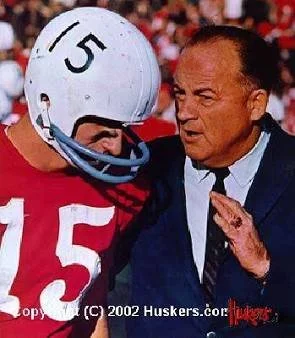
Everything changed in 1962 when Bob Devaney arrived from Wyoming. Devaney brought an immediate culture shift, securing a 9-2 record and a bowl win in his very first season.
Crucially, November 3, 1962, marked the beginning of The Sellout Streak—a legendary run where every single home game at Memorial Stadium was completely sold out, a streak that continues to stretch across generations.
Devaney's real success came in the early 1970s:
1970: Nebraska captured its first-ever National Championship, dismantling LSU in the Orange Bowl.
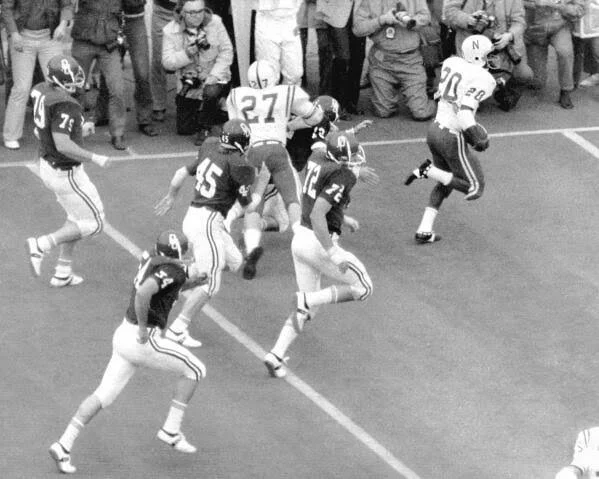
1971: The Huskers repeated as champions, a season defined by the "Game of the Century" on Thanksgiving Day. In a 1-vs-2 showdown against arch-rival Oklahoma, Johnny Rodgers’ unforgettable 72-yard punt return propelled Nebraska to a 35-31 victory. Rodgers went on to win the school's first Heisman Trophy the following year.
The Osborne Dynasty: Peak Dominance (1973–1997)
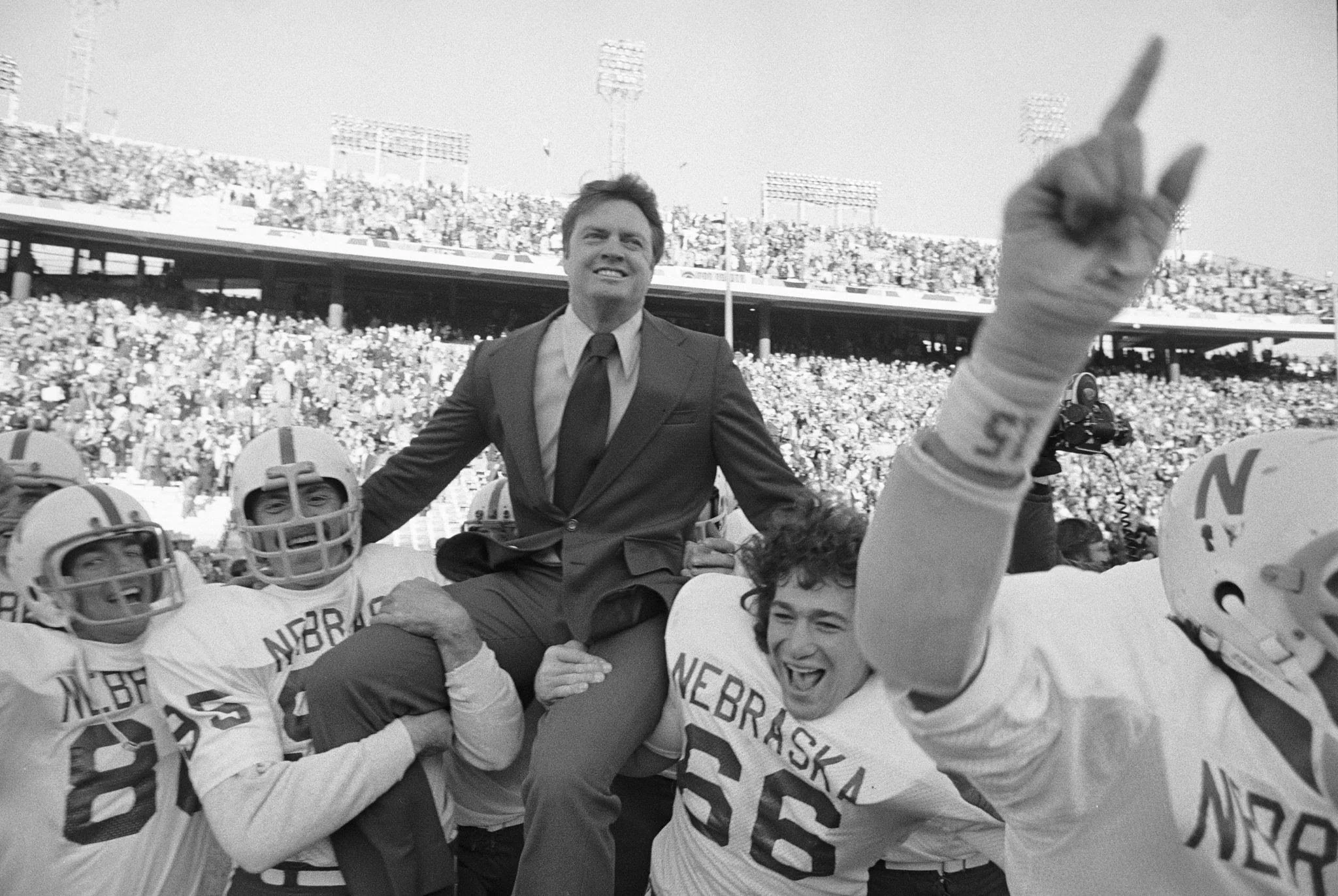
When Devaney stepped down, he handed the whistle to his soft-spoken offensive coordinator, Tom Osborne. Over the next 25 years, "Saint Tom" would construct one of the most terrifyingly consistent powerhouses in sports history, winning at least nine games every single season.
For years, Osborne’s teams were elite but fell just short of the ultimate prize, often beat by speedy Florida teams in bowl games. That narrative shattered in the 1990s when Osborne perfected his lethal, option-based Power I offense, spearheaded by the strength and conditioning program that pioneered modern sports weightlifting.
The mid-90s Huskers didn't just win; they steamrolled college football:
1994: Osborne won his elusive first national title, defeating Miami in the Orange Bowl.
1995: Led by quarterback Tommie Frazier, the '95 Huskers went 12-0. Their 62-24 demolition of Florida in the Fiesta Bowl capped off a run widely regarded as the greatest college football team ever assembled.
1997: Following an emotional undefeated season, Osborne retired, riding off into the sunset with his third national title in four years.
The Modern Transition and the Quest to Return (1998–Today)
The post-Osborne era began strongly under Frank Solich, who coached quarterback Eric Crouch to a Heisman Trophy in 2001 and reached the national championship game. However, an administrative desire to modernize the offense led to Solich's controversial firing in 2003, ushering in a turbulent couple of decades.
The program experimented with different styles—from the "West Coast" passing offense of Bill Callahan to the fiery, defensive-minded tenure of Bo Pelini, who consistently won nine games a season but struggled to break through to conference titles.
In 2011, Nebraska made a historic structural shift, leaving its traditional Big 12 rivals behind to join the Big Ten Conference. The transition proved more difficult than anticipated. Subsequent coaching tenures under Mike Riley and hometown hero Scott Frost struggled to recreate the blue-blood dominance of the past, resulting in uncharacteristic losing seasons.
Today, the program is undergoing a massive cultural revival under head coach Matt Rhule. With a renewed focus on old-school physical development, elite recruiting, and tactical discipline, the Huskers are firmly fighting their way back into national relevance in an expanded, highly competitive Big Ten landscape.
I love being a Husker! My family and I try to get down to Lincoln every season. I love talking with clients and people new to town about the spirit of Husker Football! Are you a fan? Reach out if you ever want to chat Big Red Football!